Decorative white sand for landscaping is a natural, washed and colour-sorted mineral sand sold by mesh range. This guide covers where it is used, how 20-40 and 40-80 mesh grades differ, the quality checks that matter more than price, and how export buyers sample, pack and order it.
Decorative white sand is one of the simplest ways to add contrast and finish to an outdoor space: a naturally pale, washed and graded mineral sand that sets off green foliage, dark stone and timber like nothing else in the hardscape palette. Because it is traded by mesh size rather than by a single generic name, many first-time buyers are unsure what they are actually comparing. This guide explains what decorative white sand is, where it is used, how the common export grades differ and what to confirm before ordering.
What decorative white sand actually is
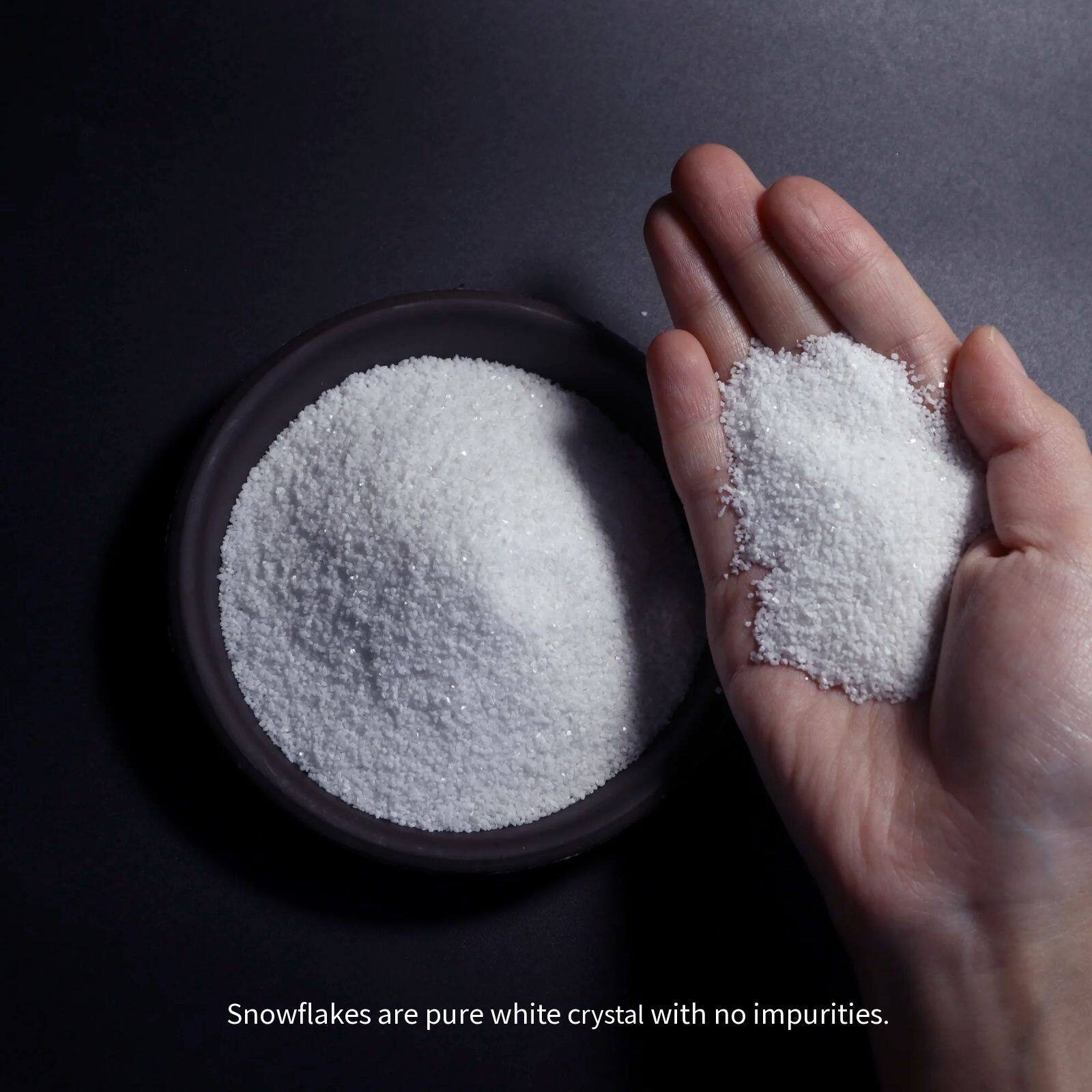
The white sand used in landscaping is a natural quartz-based sand, crushed or screened from white parent rock, then washed, dried and sieved into narrow size ranges. Its colour comes from the mineral itself — not from a dye or resin coating — which is why it stays pale outdoors, where coated or painted aggregates can fade and flake.
It is also worth separating it from two look-alikes. Beach sand carries salt and shell fragments that make it unsuitable for decorative use. Toy or play-box sand is graded for safety, not for colour consistency. Decorative white sand sits in between: clean, colour-sorted and sold by a defined particle-size range, in the same way other mineral powders and aggregates are specified.
Where landscaping white sand is used
- Garden beds and rockeries. A light-coloured surface layer contrasts with dark mulch, basalt and green foliage and helps define edges.
- Planters and indoor pots. A thin top dressing keeps the soil covered, tidies the surface and reflects light onto the plant.
- Zen and dry gardens. Fine grades rake into clean lines and hold the pattern once settled.
- Joints between pavers and stepping stones. Sand fills the gaps, suppresses weeds and lets surface water drain away.
- Water features, aquariums and terrazzo-style work, where a consistent pale background is the whole point of the design.
Choosing the grade: what the mesh numbers mean
Export grades are written as a range — 20–40, 40–80 — and the two numbers refer to the sieves the material passes and is retained on. A written specification or a batch sieve analysis, rather than a marketing name, is what should decide a purchase: two “white sands” with the same label can behave very differently on the ground.
20–40 mesh: bold texture and fast drainage
The coarser export grade shows individual grains, reads as texture from a distance and drains freely. It suits dry stream beds, rockery tops, joints between large pavers and any scheme where the sand itself is meant to be seen. Our 20–40 mesh white sand is the typical choice for these outdoor applications.
40–80 mesh: fine finish and clean lines
The finer grade packs into a smooth, even surface that is comfortable to walk on and easy to rake. It is the natural pick for zen gardens, tabletop features, indoor planters and any finishing where a softer surface is wanted. See the 40–80 mesh white sand product page for its typical specification.
If you are unsure which range fits the design, start from the layer thickness and the visual effect you want, then confirm the exact grading with a sieve analysis of the trial material. Our mesh size guide explains how mesh numbers translate into particle size for mineral products generally.
Quality checks that matter more than the price
- Colour consistency between batches. Whiteness should come from the ore body and consistent washing, not from bleaching. Ask whether colour is sorted at source.
- Grading uniformity. Ask for a sieve analysis with each batch; the standard quoted at the end of this article is what such testing follows.
- Dust and fines. Unwashed sand carries fines that stain foliage and paving at the first rain. Washed, dried sand stays clean in the bag and on site.
- Contaminants. Salt, clay lumps and organic matter should be absent — one more reason decorative sand is washed and dried before packing rather than sold straight from screening.
White sand or white pebbles?
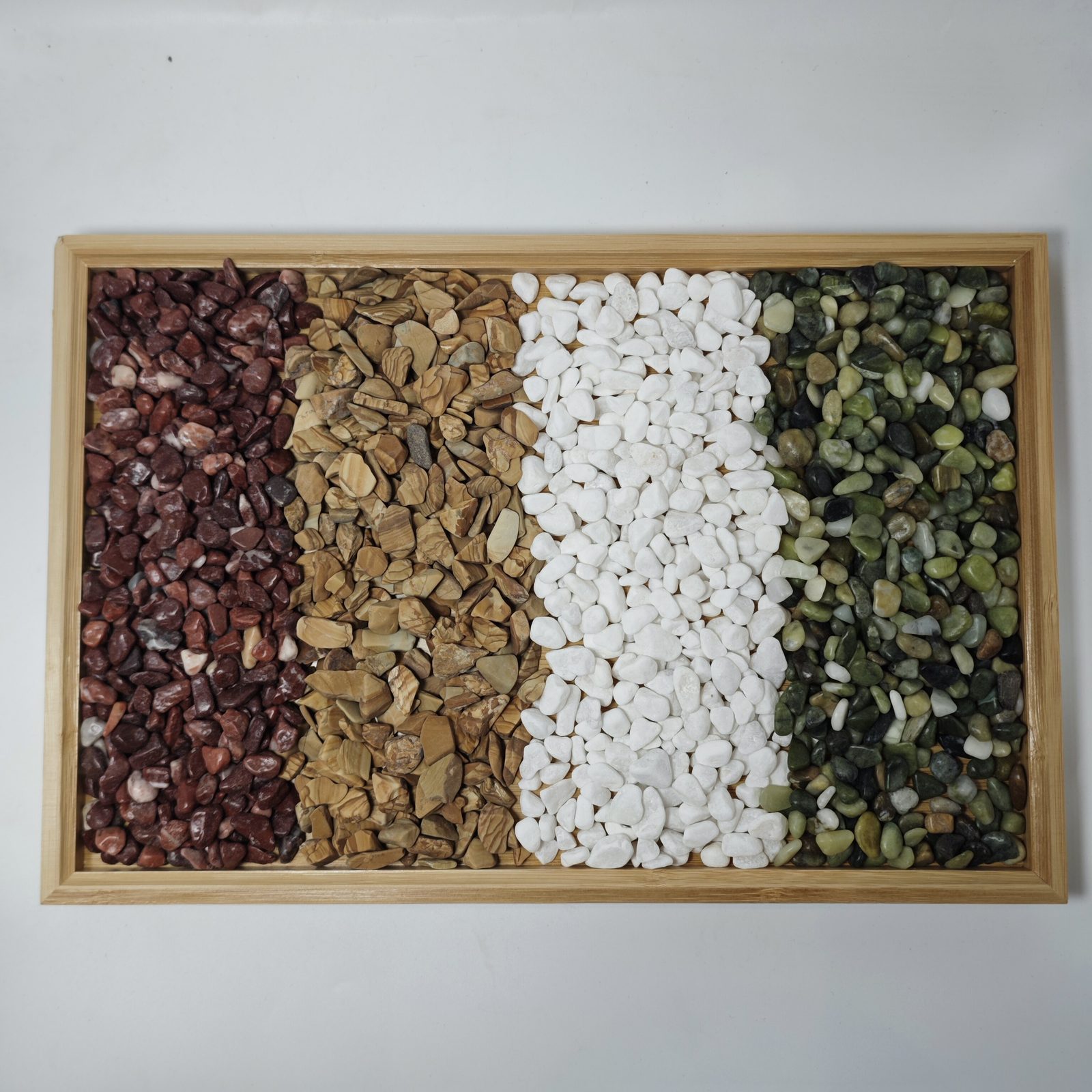
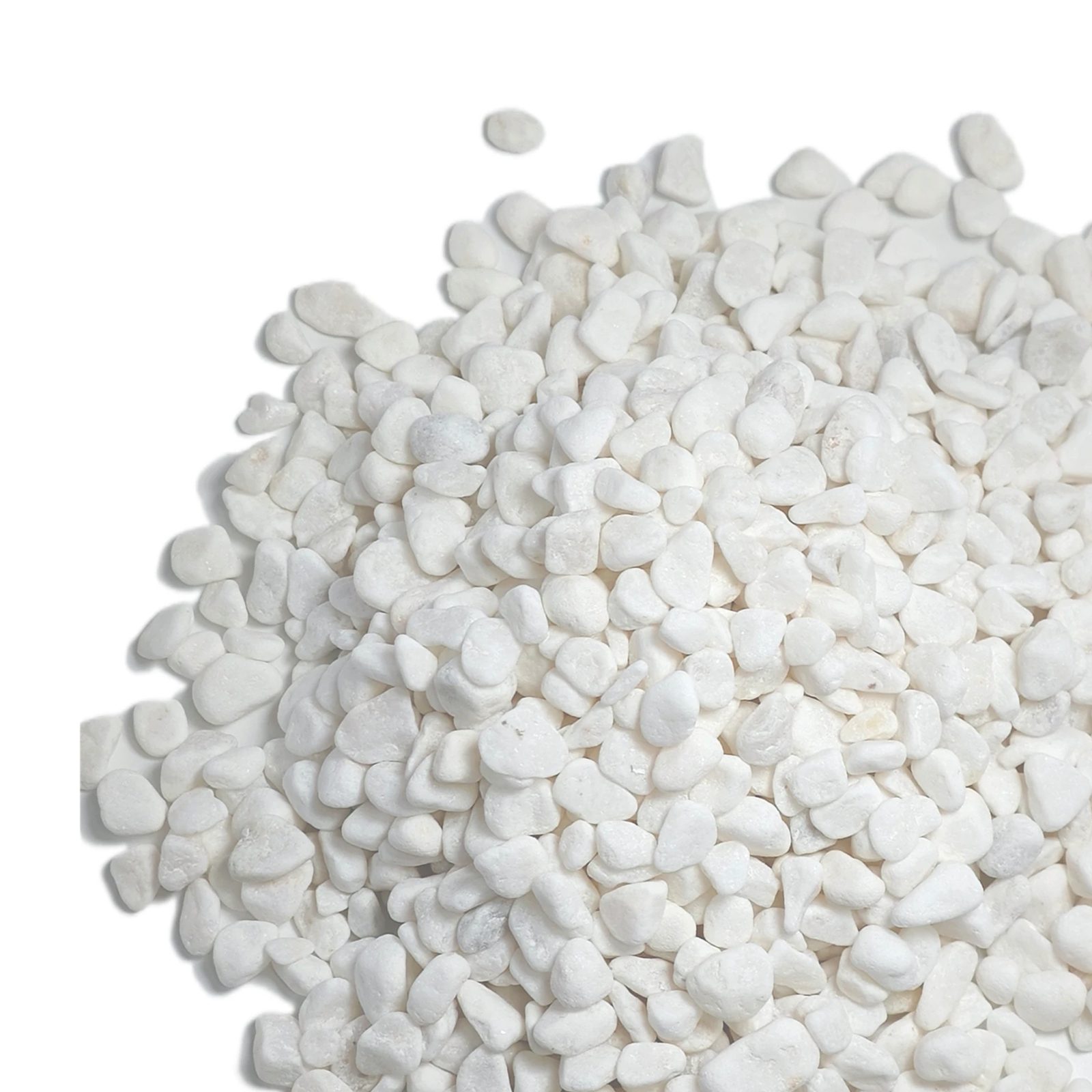
Both belong to the same family of decorative aggregates, and they are complements rather than competitors. Polished white pebbles bring weight, size variation and a bold, wet-look finish; white sand covers a large area finely and economically and settles into a calm, even plane. Many designs use pebbles as the structural accent and sand as the infill and ground plane. For laying technique, see our walkthrough on how to lay decorative pebbles, and for the wider range of colours and formats, the landscaping and garden application page collects the full decorative range.
Sampling, packing and ordering
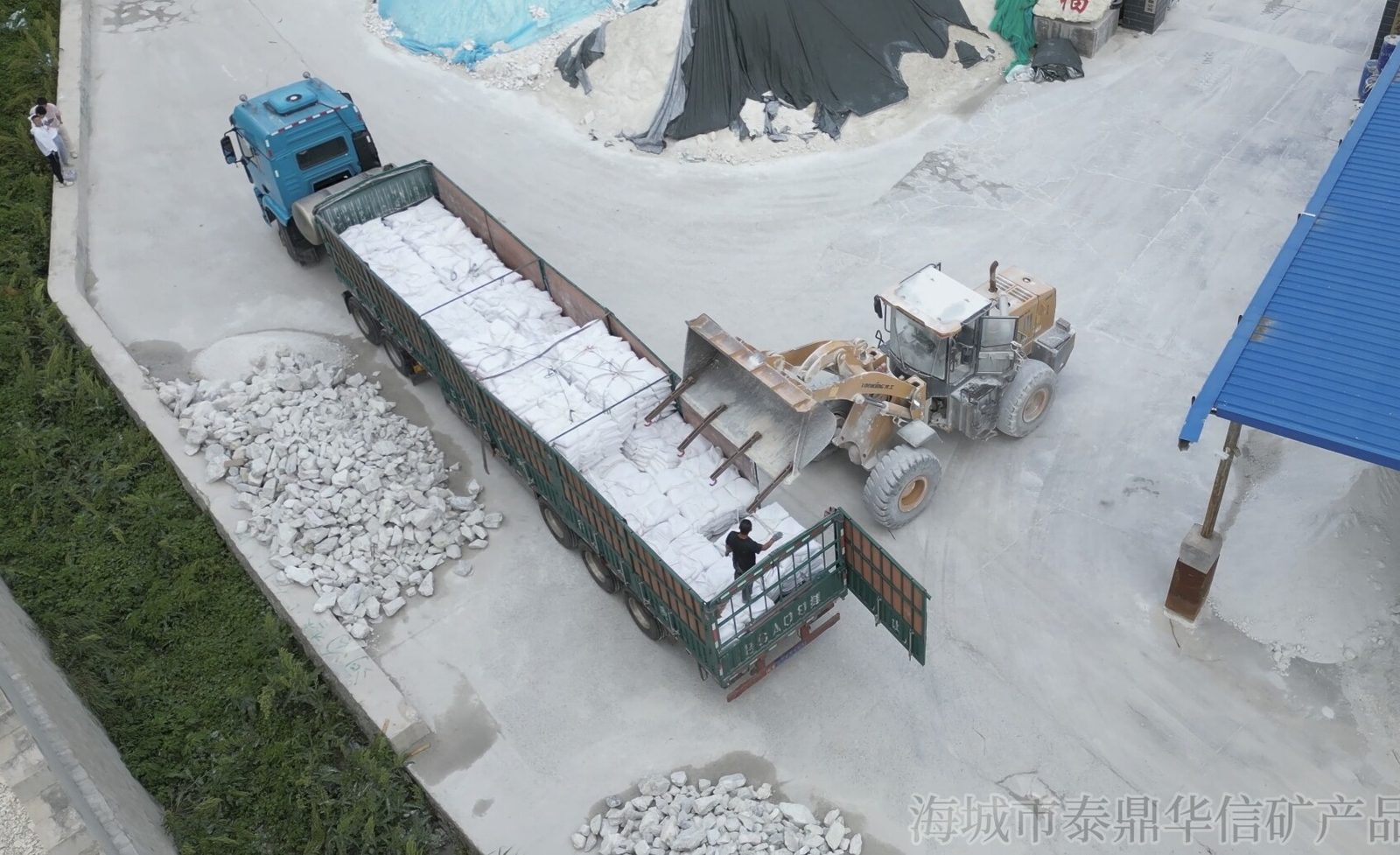
White sand is shipped in 25/50 kg bags or 1000/1250 kg jumbo bags, and a full container load is the usual commercial starting point, so it pays to confirm the details in writing before the first order: the mesh range, the moisture limit, the packing format and whether colour sorting is included. Samples of 0.5–1 kg are available free of charge for grading and colour checks — judge the material from the trial sample and batch testing rather than from photographs, because whiteness in particular reads differently under daylight and indoor light.
The white sand category page lists the current export grades side by side.