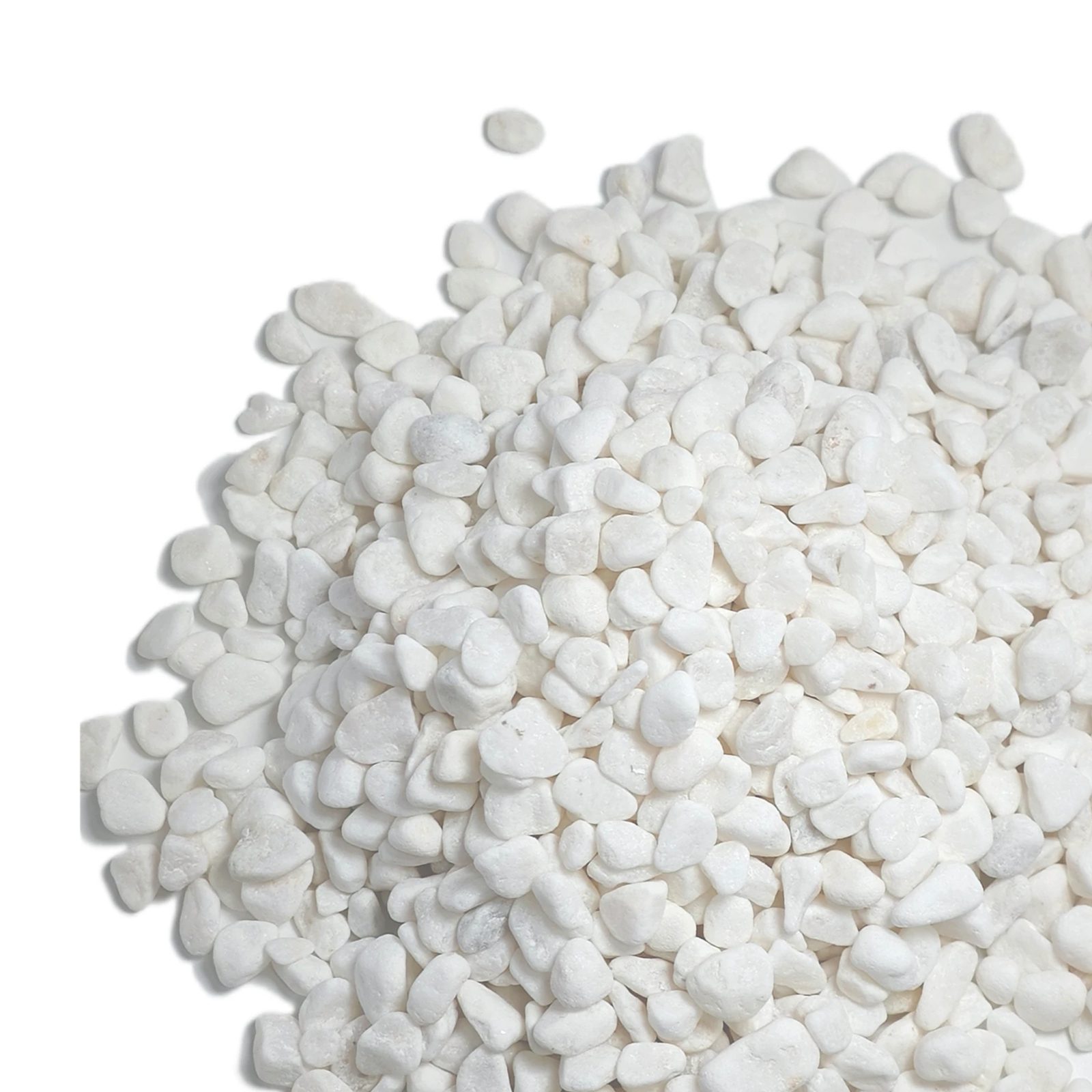
White pebbles give a garden its highest contrast surface, and they repay careful specification. This guide covers why designers choose white stone, how to match grading to garden jobs, how natural whiteness is sorted and polished rather than dyed, the care routine that keeps white surfaces bright, and what to state when ordering by the container.
White pebbles are the highest-contrast material a garden can offer: against green foliage, dark soil or grey paving, a white stone surface reads as a deliberate design decision rather than leftover aggregate. That brightness is also why white pebbles reward a little more thought at the specification stage — the same properties that make them striking make every shortcut visible. This guide covers how to choose, place and look after white pebbles in garden work; for the laying sequence itself, see our step-by-step pebble laying guide.
Why designers specify white stone
White landscape pebbles earn their place on a planting plan for practical reasons, not only aesthetic ones:
- Contrast. A white band between lawn and border, or around a dark-leaved planting, sharpens the geometry of the whole bed without any additional structure.
- Light. White stone lifts shaded courtyards and north-facing plots, reflecting available light back into the planting where pale mulch would simply disappear.
- Style ranges. The same stone serves minimalist and contemporary schemes, Japanese-style gravel gardens and Mediterranean courtyards — the grading and the company it keeps decide the character, not the colour.
- Mulch replacement. Like all decorative stone, white pebbles shade the soil, slow evaporation and do not rot, fade or need annual renewal the way bark does.
Choose the grading before the colour
Decorative pebbles are graded by particle size in millimetres, and the grading decides how the surface behaves long before colour enters the conversation. Our white pebbles are offered across the same range as the rest of the pebble lines — from small decorative gradings up to 60–90 mm statement stone — so the first question for any garden area is what the surface has to do:
Matching white gradings to garden jobs
- Ground cover between pavers and stepping stones — small gradings settle tightly, stay put underfoot and read as a pale jointing line.
- Borders, beds and plant pots — mid-range gradings cover soil and membrane fully without swallowing small plants; a white surface in a pot also keeps the root zone cooler than a dark one.
- Dry river beds and drainage strips — larger white stones carry water visually and literally, and a white "river" through green planting is one of the most reliable garden effects there is.
- Rockeries, water features and courtyards — the largest gradings read as individual stones; polished white around water doubles the brightness of the whole feature.
Natural whiteness comes from the stone, not a coating
The white in a white pebble is the stone itself — selected at source, tumbled and polished — not a dye or a surface coating. That matters commercially: colour that is intrinsic to the stone does not wash off, chalk out or go patchy after the first winter, which is the failure mode of coated decorative aggregates.
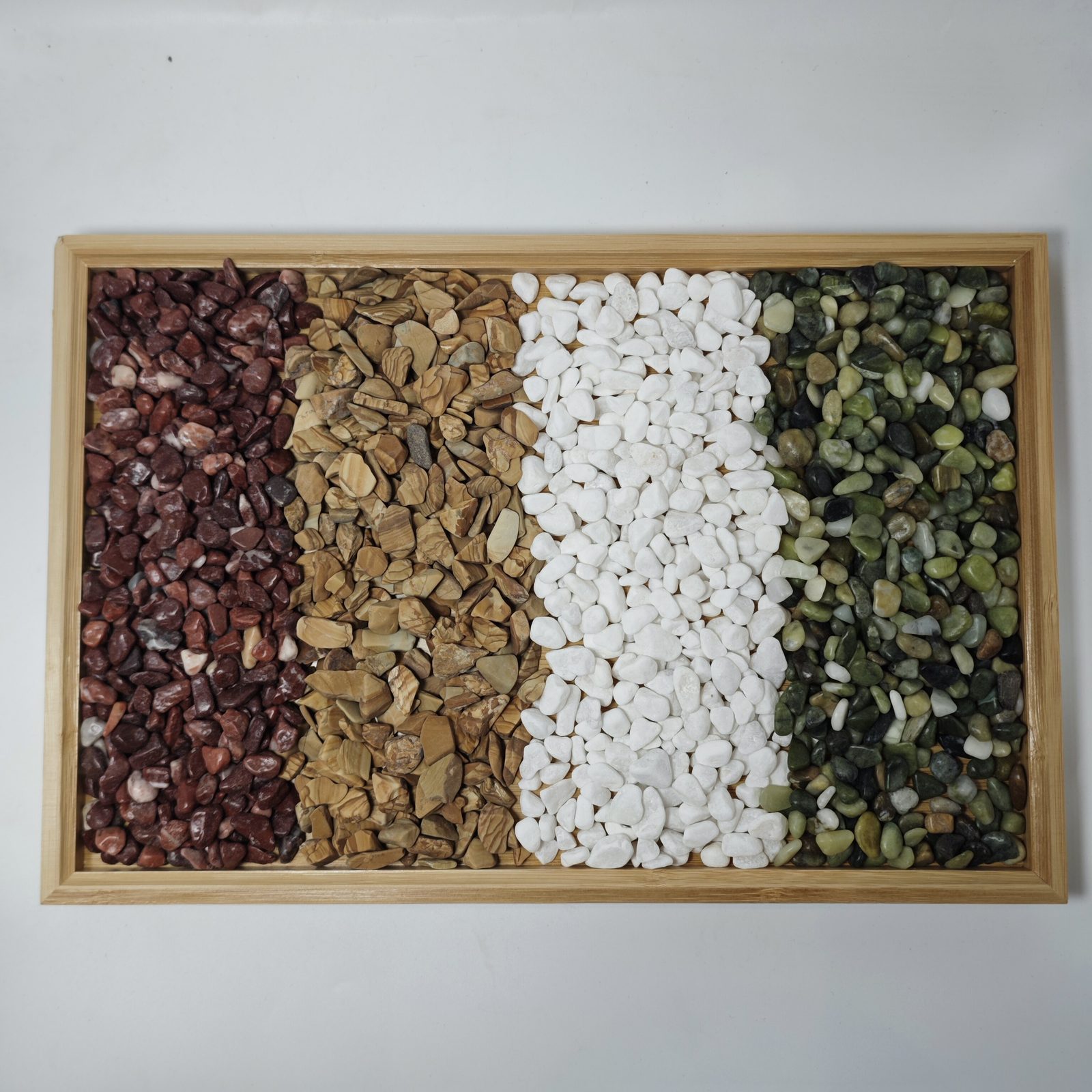
It also explains how white pebbles are supplied. Tone varies naturally with the source stone, so colour consistency between batches is a sorting outcome, not an accident. Our colour lines are hand-selected before polishing — white, green, red and wood brown — which is what keeps tone consistent between containers; the multi-colour landscaping pebbles page shows the individual colour and grading options side by side. The practical safeguard on any sizeable project is to order the full quantity, including the top-up allowance, from a single production batch.
What white shows that other colours hide
White stone is honest. Leaf litter, dust and algae that a grey pebble would quietly absorb all show up on a white surface, so placement and maintenance planning deserve a few extra minutes:
A simple care routine for white stone
- Site sensibly. Keep white surfaces away from overhanging trees where leaf fall is constant, and avoid dips where water stands — persistent damp is what invites algae.
- Remove debris early. Blow or rake leaves before they mat down wet; organic matter left on pale stone stains fastest.
- Rinse occasionally. A hose wash settles dust back into the bed and restores the colour; there is no sealant to maintain and no detergent needed.
- Keep the barrier intact. Hand-pull the few seedlings that germinate in surface dust; digging or herbicide damages the weed membrane underneath.
None of this is onerous — it is ordinary garden housekeeping — but a buyer who understands it will place white stone where it stays white, and be happier with the result.
Specifying white pebbles for a project
When white pebbles go into a tender or a purchase order, four details decide whether the delivered containers match the sample that won the job:
- Grading in millimetres — state the range, not a vague "small/medium"; grading is checked by standard sieve analysis of the delivered lot.
- Colour consistency — agree that the whole quantity, including top-up, comes from one hand-sorted production batch.
- Packaging — 20/25 kg bags for site handling, jumbo bags or palletised loads for larger areas; state which handling equipment is available on site.
- Coverage — order against the laid area at the specified layer thickness, and add a top-up allowance for settlement.
Consistency of grading from bag to bag is exactly what sieve-based acceptance testing is for — the same test methods referenced for construction aggregates apply to decorative stone delivered by the container.
Sourcing white garden pebbles from TDHX
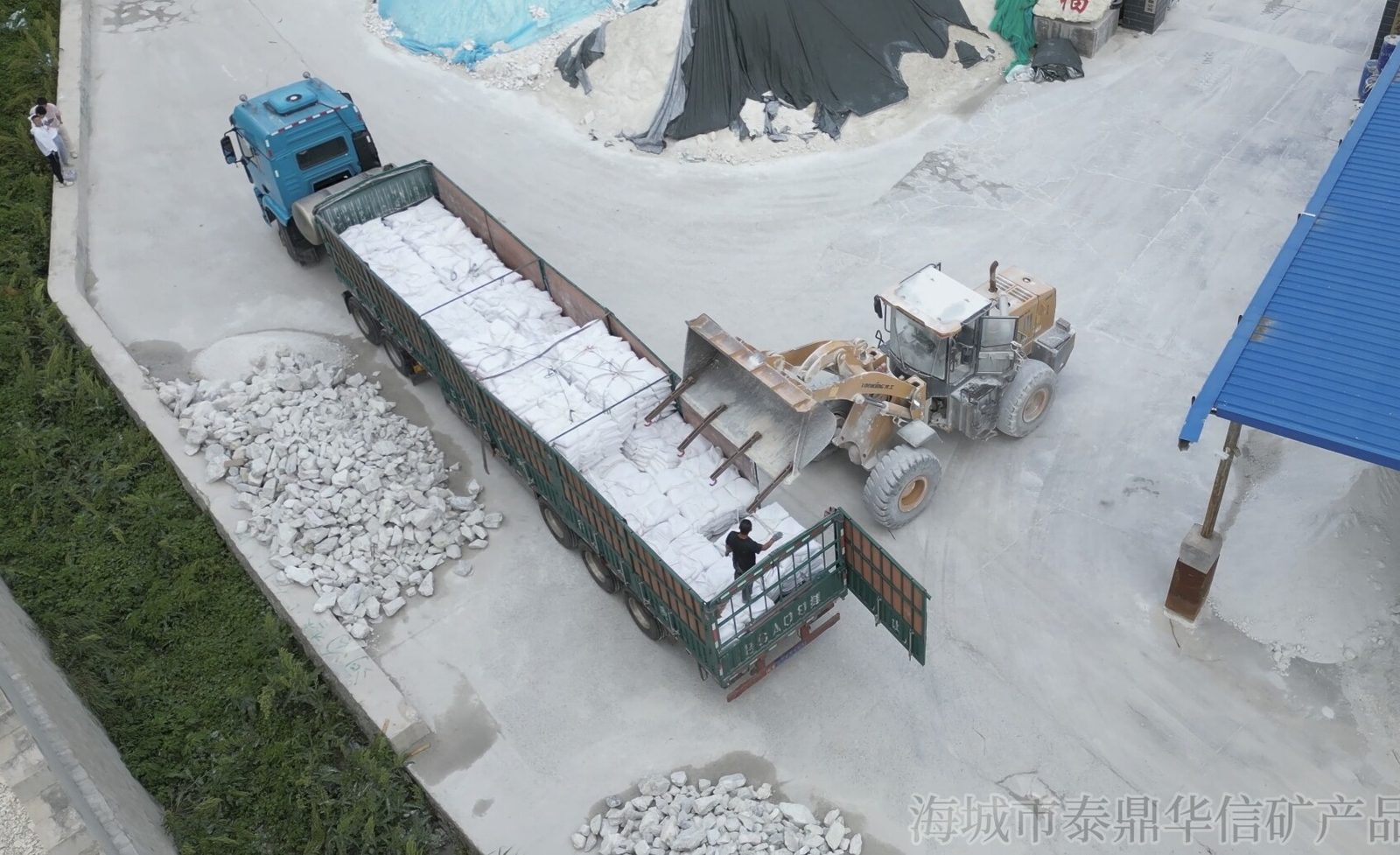
We polish and screen our pebbles in-house in Haicheng, Liaoning, and pack to site requirements from small bags to pallets. The landscaping and garden applications page shows how the colour lines are used across garden decoration, paving and greening work, and our mineral product selection guide covers the specification habits that carry over from powder purchasing. To quote a white pebble enquiry accurately we need four details: grading, colour, coverage area and destination port — send those and we will come back with the most economical packaging for the job.