Dolomite quotations look alike on paper, but delivered lots differ in chemistry and consistency. This guide shows how to evaluate a dolomite powder supplier in China: CaO/MgO windows, fineness and whiteness testing, ground versus calcined product, documentation and export logistics.
Quotations for dolomite powder arrive from many Chinese provinces at remarkably similar prices, and on paper most of them look interchangeable: a white powder, a mesh number, a whiteness figure. Delivered lots, however, can behave very differently, because dolomite is bought for a reason most fillers cannot match — it delivers both calcium and magnesium oxides from a single feedstock. How steadily a supplier can hold that chemistry, fineness and whiteness is decided long before the bag is filled. This guide sets out how an international buyer can evaluate a dolomite powder supplier in China before committing to a first container.
Start with the chemistry, not the price
The commercial logic of dolomite is the paired oxides. Glassmakers use it to introduce both CaO and MgO in one batch material instead of blending limestone with magnesia; coatings and plastics formulators value it as an economical, bright filler; agriculture and construction use it for neutralising acidity and improving soils and mortars. But the word “dolomite” covers a range of rocks: deposits described as dolomitic can sit close to the ideal pairing of the two carbonates, or drift toward dolomitic limestone where the MgO contribution falls noticeably. If your process depends on the magnesium side — glass batch chemistry, soil neutralisation, refractory formulations — what you are really buying is a chemistry window, not a powder.
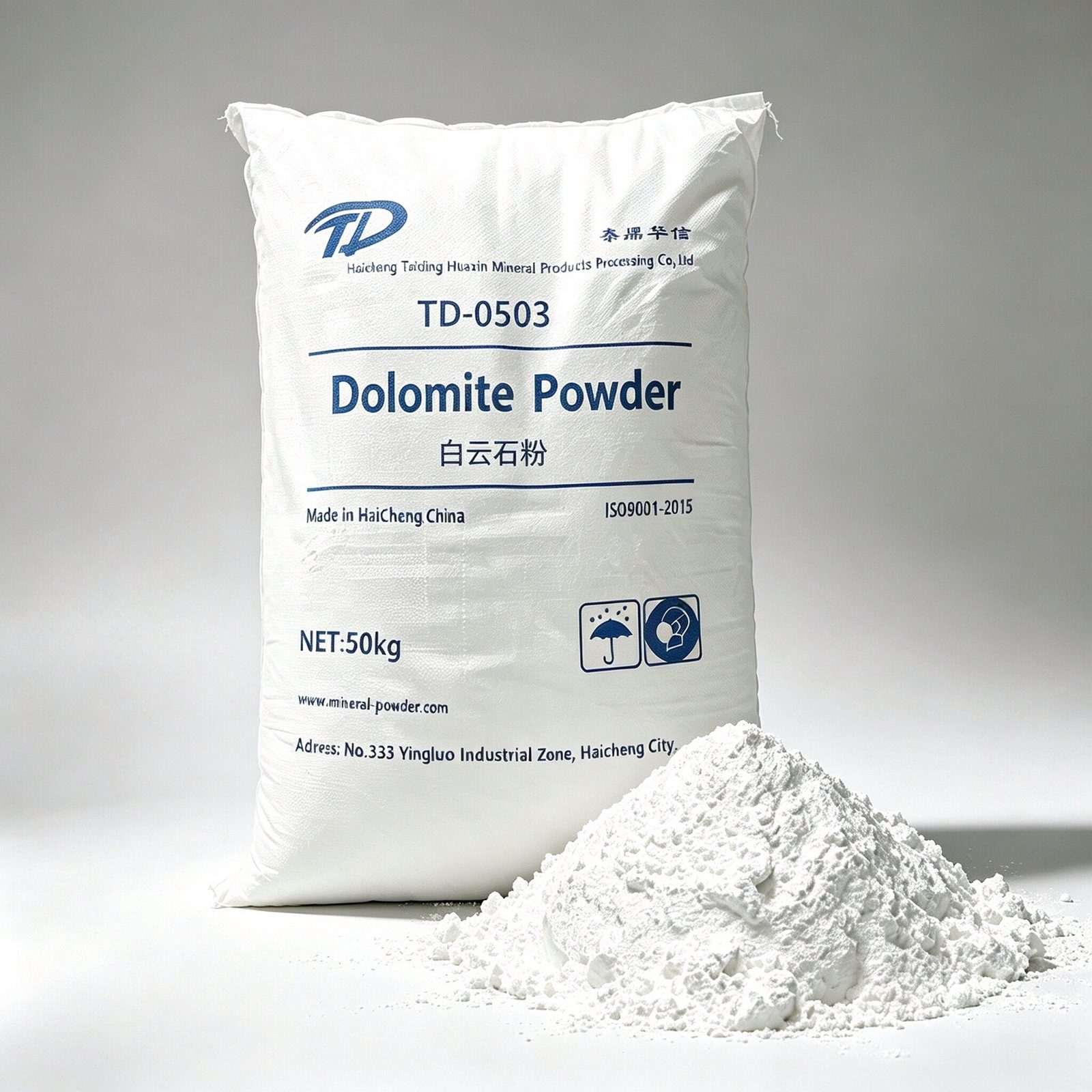
Our own standard, TDHX-Dolomite-2025-08, specifies CaO 27–35%, MgO 22–30%, SiO₂ ≤8%, Fe₂O₃ ≤0.5% and whiteness 80–95% across 200–2000 mesh; the full range is on the dolomite powder product line page. Whatever supplier you talk to, the question is the same: ask them to state the window their ore actually delivers, and how much it moves between feed lots.
Ask for the ore window, not a typical value
A single “typical analysis” is a sales document. A window backed by lot-level records is a quality system. Three questions separate the two: which quarry or feeding areas supplied the lot you are quoting on; how often production is sampled for full chemical analysis; and whether off-spec material is blended down or rejected. A producer that works its own or long-term contracted ore can answer with records. A trader buying lump dolomite on the open market whenever the price is right usually cannot — and no discount compensates for a glass batch that has to be re-tuned every shipment.
Fineness and whiteness: how they are actually controlled
Dolomite powder is ground from roughly 200 mesh (about 74 µm) up to 2000 mesh for fine filler grades — the mesh size guide explains how mesh maps to microns. Two measurement questions decide whether the figure on a quotation means anything:
- Sieve or laser? A residue figure on wire-cloth test sieves answers “how much coarse material is left”; laser diffraction describes the full particle-size distribution. Both are legitimate, but they answer different questions, so ask which method the quoted figure comes from. Test sieves themselves are standardised equipment — ISO 3310-1 specifies the technical requirements for metal wire cloth test sieves, which is what makes a “200 mesh residue” comparable between laboratories.
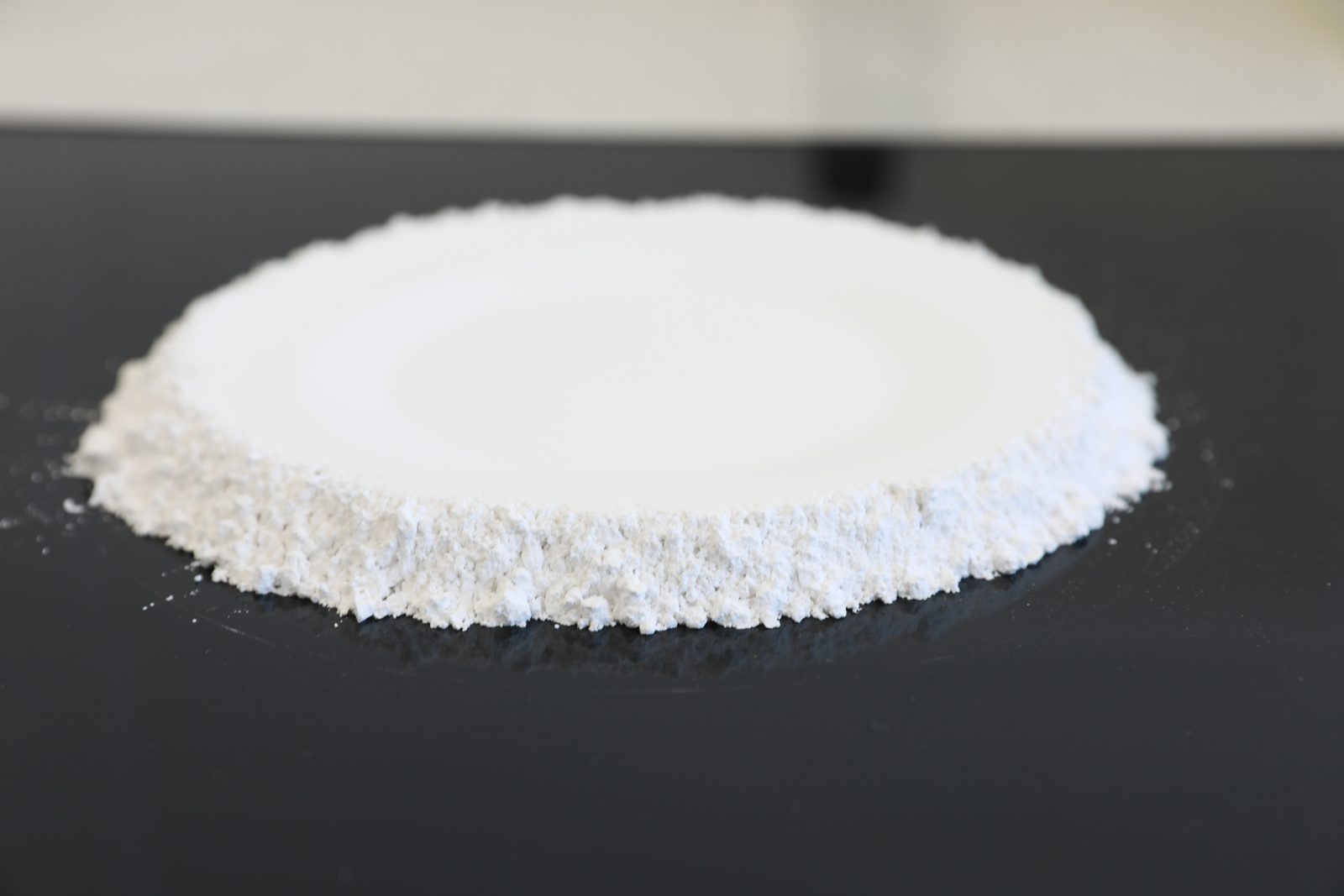
- Whiteness as a range. Agree the range you will accept rather than a single best-case value, and require each lot’s measured figure on the certificate. Iron content matters here too: it is the usual reason a bright-white ore turns grey after grinding or in the end product.
The testing questions worth asking directly
Which standard is each figure measured to? How often is production sampled, and are retain samples kept so a dispute can be re-tested against the same reference? Suppliers with an in-process quality system — regular sampling on the line, hourly packing-weight checks, documented batch records — answer these without hesitation; vague answers here predict vague batches later. For a fuller walk-through, see our article on how to verify a Chinese mineral powder supplier and the notes on quality control in mineral powder production.
Consistency across shipments
Any producer can hit a specification once. The commercially important question is what arrives in month six of the contract. Dolomite chemistry is fixed by the ore body, so a supplier’s leverage lies in blending and feed control: holding several feeding areas, analysing each as it arrives, and blending toward the middle of the promised window instead of letting the powder follow the ore. Ask to see how a past batch record compares with the quotation — the gap between the two is the truest picture of what your second container will look like. Where a specification is tight, agree the tolerance and the remedy (re-test, replacement or credit) in writing before the first order, not after the first claim.
Ground or calcined: confirm the form matches your process
Most “dolomite powder” offered for export is ground raw dolomite — crushed, dried, milled and classified. Calcined and dead-burned dolomite products for refractory and steelmaking use are a different production route altogether: they require kilns, not just grinding lines, and many powder producers do not operate them. Confirm early which form your process needs, and treat a supplier who cheerfully quotes both without mentioning plant differences with some caution. Grinding and calcining are separate investments, and honest suppliers say plainly which one they run.
Application fit also narrows the shortlist. For glass batch use, our article on dolomite powder in glass manufacturing and the glass and ceramics application page list the parameters glassmakers check first; for agricultural lime and soil conditioning, the soil pH correction guide and the agriculture and feed page cover neutralising value and gradation from the buyer’s side.
Documentation, packaging and export logistics
In coatings and plastics terminology, ground dolomite is an extender — a natural mineral filler whose specifications and general test methods are defined in the ISO 3262 series, with Part 1 giving the definitions and the common test methods the later parts reference. That vocabulary is useful when comparing specification sheets across suppliers. Beyond the datasheet, the standard document set for a dolomite shipment is a lot-specific COA stating measured values (not typical ones), the TDS, and a safety data sheet; third-party inspection such as SGS can be arranged at the buyer’s option before loading.
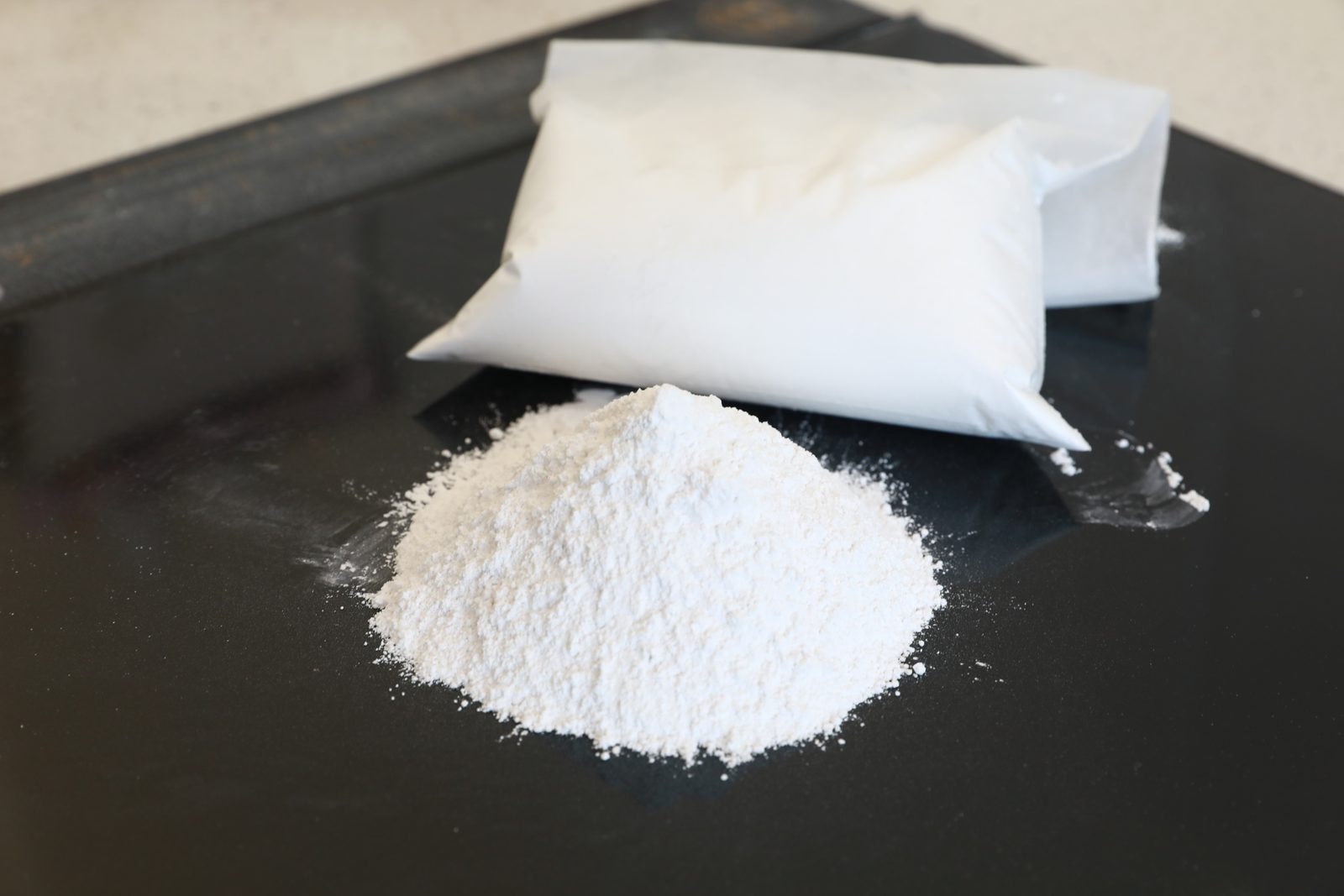
- Bags: 25 kg and 50 kg woven, paper-plastic composite or kraft bags; 1000 kg and 1250 kg jumbo bags for container loads; OEM printing available.
- Order size: the MOQ is normally one 20-ft container, roughly 25–27 tonnes depending on grade and packaging — our dolomite powder MOQ guide explains how that moves with grade and packaging.
- Ports: Dalian and Yingkou in Liaoning cover most destinations; buyers may nominate other Chinese ports.
- Payment and lead time: T/T and L/C at sight are the norm; a lead time of 7–15 days after the specification and packaging artwork are confirmed is realistic for standard grades, with custom specifications quoted case by case.
A practical vetting checklist
- Confirm the supplier mines or holds long-term contracted dolomite ore, and can name the feeding areas behind your lot.
- Require a chemistry window (CaO, MgO, SiO₂, Fe₂O₃) with lot-level records — not a single typical value.
- State fineness as mesh plus method: a sieve residue on standardised test sieves, or a full laser-diffraction distribution — and the tolerance you accept.
- Agree whiteness as an accepted range, and require the measured figure per lot on the COA.
- Confirm ground versus calcined before shortlisting; they are different plants.
- Ask how often production is sampled and whether retain samples are kept.
- Require a lot-specific COA, TDS and safety data sheet with every shipment; add third-party inspection at your option.
- Fix packaging, MOQ, lead time and payment terms in writing on the proforma invoice.
If you are also sourcing talc, the same framework applied to a different mineral is in our guide to choosing a talc powder supplier in China, and the mineralogy behind the two materials is compared in talc versus dolomite. Send us your target CaO/MgO window and mesh, and we will reply with the closest grade, its TDS and a free sample.