
Quartz Sand 4–70 Mesh
Natural washed quartz sand with white translucent angular grains. Standard gradings from 4–6 mesh (3–5 mm) down to 40–70 mesh (0.21–0.43 mm), sieved to narrow distribution with low impurities — for glass, ceramics, filtration, foundry, construction and landscaping.

Technical Specifications
| Specification | Value |
|---|---|
| Material | Natural quartz (silica) sand |
| Size Grades | 4–6 / 6–8 / 8–16 / 16–26 / 26–40 / 40–70 mesh |
| Equivalent Size | 3–5 mm down to 0.21–0.43 mm |
| Appearance | White / translucent angular grains |
| Processing | Crushed, washed, multi-stage sieved, impurity controlled |
| Custom Grading | Other mesh sizes on request |
| Chemical Data | Batch COA with every shipment; SGS inspection on request |
Typical values per enterprise TDS TDHX-Dolomite-2025-08; actual batch data available on request.
Applications & Industries
- Glass manufacturing
- Ceramics
- Water filtration media
- Foundry casting
- Abrasive blasting
- Artificial stone & terrazzo
- Concrete & mortar aggregate
- Sports turf infill
- Garden landscaping decoration
Product Overview
Quartz sand (silica sand) is produced from high-purity natural quartz ore through crushing, water washing, multi-stage sieving and impurity removal. The grains are white to translucent with an angular shape and high hardness (Mohs 7), giving stable chemical properties, good weather resistance and low dust content. Standard gradings run from 4–6 mesh (3–5 mm) down to 40–70 mesh (0.21–0.43 mm), and other cut sizes can be produced to order.
Available Gradings
4–6 mesh (3–5 mm) · 6–8 mesh (2–4 mm) · 8–16 mesh (1–2 mm) · 16–26 mesh (0.5–1 mm) · 26–40 mesh (0.43–0.71 mm) · 40–70 mesh (0.21–0.43 mm). Each grading is sieved to a narrow particle size distribution, and mesh size, SiO₂ content and whiteness can be adjusted against the buyer's specification.
Typical Applications
Quartz sand is widely used in glass manufacturing, ceramics, water treatment and filtration media, foundry casting, abrasive blasting, artificial stone and terrazzo, concrete and mortars, sports turf infill, and garden or landscape decoration.
Customization & Packaging
We support customized gradings, washing/drying and magnetic separation requirements, OEM private label and export packaging: 25/50 kg woven bags, jumbo bags or bulk cargo. Batch certificate of analysis is provided with every shipment, and SGS or equivalent third-party inspection can be arranged before loading.
Factory photos by grading
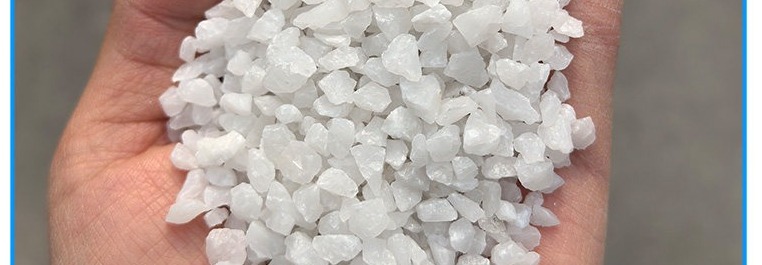 4–6 mesh (3–5 mm)
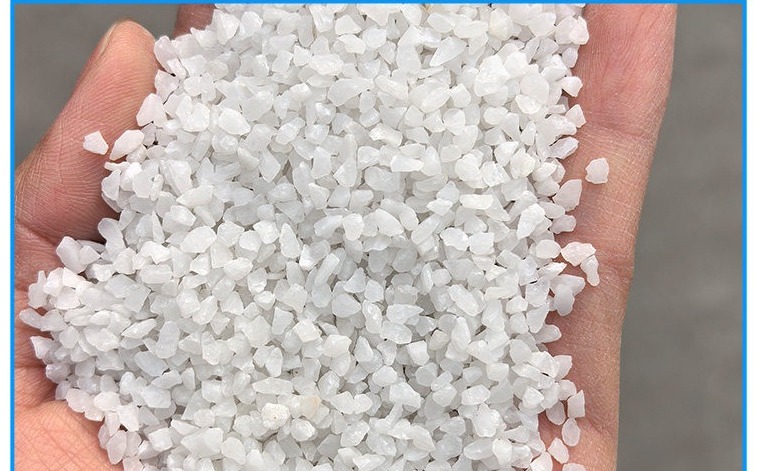 6–8 mesh (2–4 mm)
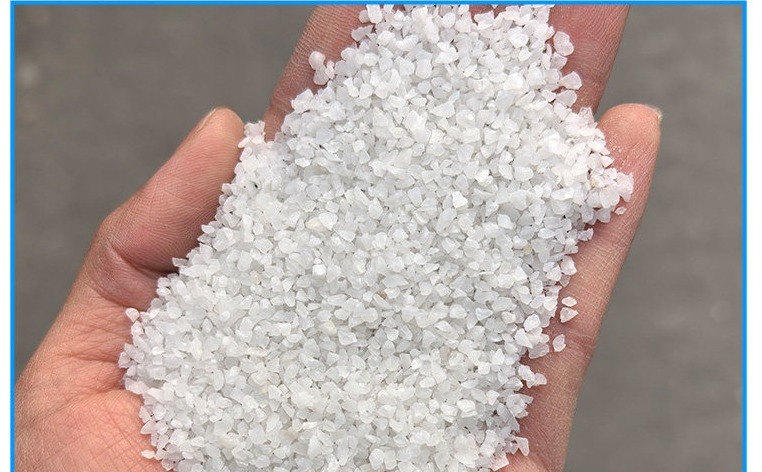 8–16 mesh (1–2 mm)
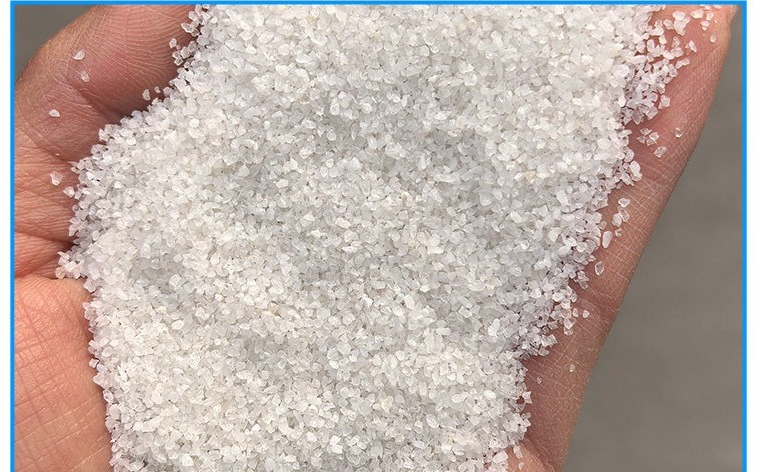 16–26 mesh (0.5–1 mm)
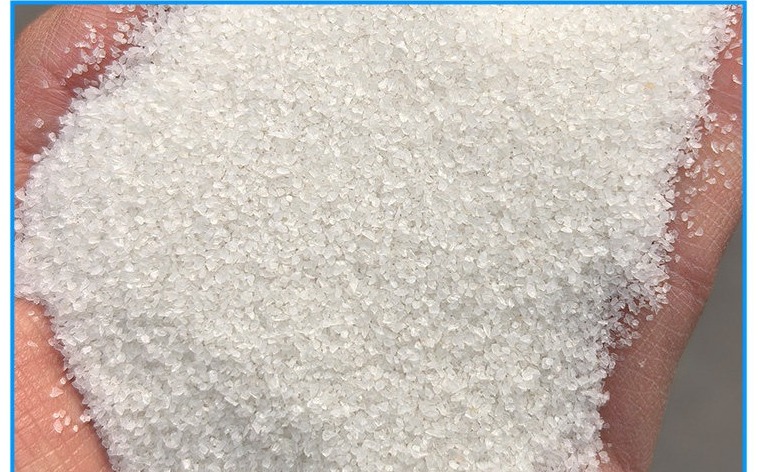 26–40 mesh (0.43–0.71 mm)
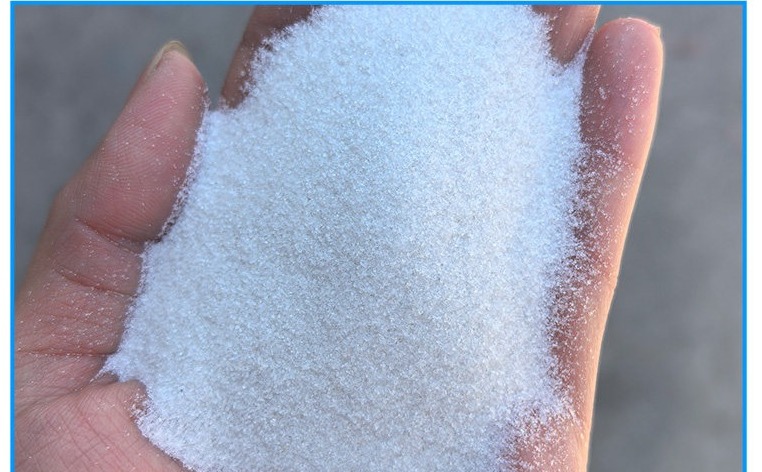 40–70 mesh (0.21–0.43 mm)
How buyers use this grade
In glass, high-purity silica and dolomite contribute the oxide balance that sets melting behaviour and durability.
In ceramics, mineral powders form the body and glaze, controlling firing shrinkage, whiteness and mechanical strength.
In water and industrial filtration, graded inert sand and mineral media remove suspended solids.
In foundry, olivine and other minerals form mould and core sands with good thermal stability.
In terrazzo and decorative concrete, graded calcite sand gives a hard, bright aggregate that wears well under foot traffic.
In artificial and engineered stone, calcite sand is the principal filler that sets hardness and surface finish.
In mortar and render, mineral fillers adjust workability, strength and surface finish.
In landscaping, pebbles and white sand are used as decorative ground cover, pathways and water features.
In architectural decoration, graded mineral sand and pebbles add texture and colour to renders, floors and features.
From this product to your shipment
Follow how this grade is sourced, processed, checked, packed and shipped — each step links to the details.
Related Products


Industries that use this grade
Further reading: definitions, comparisons, selection
Frequently Asked Questions
How is your snow white sand purified?
The raw sand goes through strict colour sorting and magnetic separation, which removes mineral and metal impurities and delivers very high and consistent whiteness.
What sizes of white sand do you produce?
20–40 mesh and 40–80 mesh are our standard export sizes; other gradings can be produced to order.
What is white sand used for?
Industrial filler, glass and ceramic raw material, water filtration media, and decorative use in terrazzo and coatings.
Can you supply samples before a bulk order?
Yes, sample bags are free of charge; the buyer covers courier cost, which is refunded against the first bulk order.
Related reading

White Sand Export HS Code 2505.10 Explained
White sand leaves China under HS 2505.10, the silica and quartz sands subheading of heading 25.05. This guide reads the six digits, explains why…
Read article
Mineral Powder Payment Terms: What a 30% Deposit Really Covers
A 30% deposit with the balance to follow is the workhorse payment structure in mineral powder exports. This guide explains what the deposit…
Read article
Third-Party Inspection for Mineral Powder Shipments: When It Pays Off and How to Write the Clause
A COA is the supplier's own account of a batch; third-party inspection checks it independently. What an inspector can verify for bagged mineral…
Read articleStandards and sources quoted
The quotations below are taken verbatim from published standards; each link goes to the issuing body's official page.
“This test method covers the determination of the particle size distribution of fine and coarse aggregates by sieving.”
— ASTM International, ASTM C136/C136M-25, Standard Test Method for Sieve Analysis of Fine and Coarse Aggregates, official source
“ISO 3310-1:2016 specifies the technical requirements and corresponding test methods for test sieves of metal wire cloth. It applies to test sieves having aperture sizes from 125 mm down to 20 µm, in accordance with ISO 565.”
— ISO — International Organization for Standardization, ISO 3310-1:2016, Test sieves — Technical requirements and testing — Part 1: Test sieves of metal wire cloth, official source
Need a custom specification?
Tell us your target mesh size, whiteness and application. We send samples and a quotation within 24 hours.